Moving a piano is one of the most challenging household moving tasks. Whether you’re relocating an upright piano across the room or transporting a grand piano to a new property, careful planning is essential. A piano is not only heavy but also delicate, with thousands of precisely engineered components that can be damaged if handled incorrectly.
This guide explains how to approach moving a piano safely, the equipment involved, common mistakes to avoid and when professional moving support may be appropriate. Cambridge Removals may be able to assist when a piano forms part of a larger house move or when the individual job is suitable based on the piano, access and transport requirements.
Can You Move A Piano Yourself?
The short answer is yes, but only in very limited situations.
A small upright piano being moved a short distance on a level surface may be manageable with several capable helpers and the correct equipment. However, most pianos are significantly heavier than they appear, with the majority of the weight concentrated in one area. This uneven weight distribution makes them difficult to balance and increases the risk of injury or damage.
For moves involving
- Stairs
- Narrow hallways
- Uneven ground
- Long distances
- Valuable or antique instruments
Professional assistance is usually the safest option.
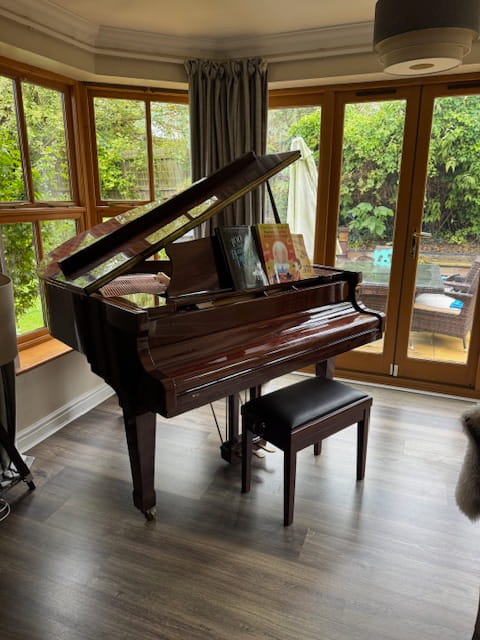
Why Pianos Are Difficult To Move
Unlike standard furniture, a piano combines considerable weight with delicate internal mechanics.
Most pianos contain over 10,000 moving parts, all carefully adjusted to produce accurate sound. Even a minor knock during transport can affect how the instrument performs.
Additional challenges include
- Uneven weight distribution
- Fragile wooden casing
- Delicate pedals and legs
- Sensitive internal strings and hammers
- Difficult centre of gravity
A successful piano move depends on protecting both the instrument and everyone involved.
What Equipment Is Needed For A Safe Piano Move?
The equipment required depends on the piano type, property access and the vehicle being used. Some specialist piano moves may require lifting equipment or tail-lift vehicles, while more straightforward moves may be completed safely using appropriate moving equipment and careful planning.
Typical equipment includes
- Heavy-duty furniture blankets
- Piano straps
- Moving dollies
- Protective floor coverings
- Lifting equipment
- Ramps where required
- Secure transport vehicles
Cambridge Removals does not operate tail-lift vehicles, so each piano move must be assessed individually to confirm whether it can be completed safely.


Preparing Your Piano Before Moving
Good preparation can make the move considerably smoother.
Measure Every Access Point
Measure doorways, corridors, staircases and entrances at both properties before moving day. This helps identify potential access issues in advance.
Remove Any Obstacles
Clear furniture, rugs and decorative items from the moving route to reduce trip hazards and allow enough space for safe lifting.
Secure Loose Components
Close and lock the keyboard lid if possible. Any removable music stands or accessories should be packed separately.
Protect The Piano
Wrap the piano carefully using thick moving blankets to reduce the risk of scratches, dents and impact damage during transportation.
Common Mistakes During A Piano Move
Many problems occur because people underestimate how complex moving a piano can be. Some of the most common mistakes include:
Using Too Few People
A piano should never be lifted by one or two people alone. The weight can quickly become unmanageable, especially when navigating steps or uneven surfaces.
Lifting Incorrectly
Improper lifting techniques increase the risk of back injuries and make it much harder to control the instrument safely.
Forgetting To Plan The Route
Unexpected tight corners or narrow doorways can leave you with very few safe options once the move has started.
Using Inadequate Equipment
Domestic trolleys and basic moving straps are rarely suitable for transporting such a heavy and valuable item.
Rushing The Process
Trying to move quickly often leads to avoidable accidents, damaged walls, scratched flooring or harm to the piano itself.
Upright Vs Grand Piano Removal
Different types of pianos require different handling techniques.
Upright Pianos: Although more compact, upright pianos can still weigh several hundred kilograms. Their weight is concentrated towards the rear, making balance particularly important.
Grand Pianos: Grand pianos require a much more involved process. The legs, pedals and lid often need to be removed carefully before transportation. This work requires experience and suitable equipment to avoid damaging delicate components.
Transporting A Piano Over Long Distances
A long-distance piano removal introduces additional considerations.
The piano must remain securely positioned throughout the journey to minimise movement inside the vehicle. Sudden braking or sharp turns can place unnecessary stress on both the instrument and the vehicle if it has not been secured correctly.
Weather can also affect transportation. Excessive moisture, rapid temperature changes and prolonged exposure to direct sunlight may affect both the wooden cabinet and the internal components.
Should You Tune Your Piano After Moving?
Yes. Even when transported professionally, most pianos benefit from being tuned after the move.
Changes in temperature, humidity and movement during transport can all affect tuning stability.
Many piano technicians recommend waiting a short period after relocation before arranging tuning, allowing the instrument to adjust to its new environment.
When Should You Seek Professional Help With A Piano Move?
Professional help should be considered whenever the move involves increased complexity or greater risk. However, not every removals company has the equipment required for every type of piano move, so it is important to explain the piano type, access conditions, and destination before booking.
This includes
- Valuable family heirloom pianos
- Antique instruments
- Grand pianos
- Staircases
- Apartment buildings
- Long-distance relocations
- Difficult property access
A suitable removals provider should assess the instrument, access route and transport requirements before confirming whether the job can be completed safely. More complex moves involving restricted access, significant steps or specialist lifting requirements may need a dedicated piano removal company with specialist equipment.
Cambridge Removals may be able to move upright pianos as part of a larger house relocation or as an individual job where the access and transport requirements are suitable. As we do not operate vans with tail lifts, all piano enquiries are assessed before the move is accepted.
Frequently Asked Questions

How Heavy Is A Typical Piano?
The weight varies depending on the type of piano. Upright and grand pianos can both weigh several hundred kilograms, making them much heavier than most household furniture. Grand piano moves commonly require specialist dismantling, lifting and transport equipment, so customers may need to use a dedicated piano removal specialist depending on the instrument and access conditions.
Can A Piano Be Moved Without Professional Equipment?
Small moves may be possible in limited circumstances, but specialist equipment significantly improves safety and helps protect the piano from damage.
Will Moving A Piano Damage It?
Not necessarily. A carefully planned move using suitable equipment and handling techniques greatly reduces the risk of damage.
Does A Piano Need Tuning After Being Moved?
In most cases, yes. Relocating a piano can affect its tuning, even if it has been transported carefully.
Can A Piano Be Moved Upstairs?
Yes, although this requires detailed planning and is often best carried out by experienced professionals using appropriate lifting equipment. It may be possible, but stair access significantly increases the complexity and risk of the move. Jobs involving stairs or specialist lifting requirements must be assessed individually and may require a dedicated piano removal company with equipment such as a tail lift or specialist lifting system.

Get your instant quote
Get a personalized quote in seconds. Our team is ready to help you plan a smooth and stress-free move.
Can Cambridge Removals Move My Piano?
We may be able to assist when the piano forms part of a larger house move or when the individual job is suitable. This depends on the type and size of the piano, access at both properties and the equipment required. We do not operate vans with tail lifts, so we assess each enquiry before confirming whether we can complete the move safely.
Planning A Piano Move With Confidence
Moving a piano requires far more preparation than moving standard furniture. Understanding the weight of the instrument, protecting its delicate components and planning the route carefully can make the process much safer.
If your piano forms part of a larger house move, Cambridge Removals may be able to transport it alongside your other belongings, subject to the piano type and access conditions. We may also consider suitable standalone jobs, but each enquiry must be assessed individually because we do not operate tail-lift vehicles.
To learn more about our wider moving services, explore our Removals Services or contact our team with details of your piano, collection address, delivery address and access conditions.